
How Arrest Warrants Work in Franklin County
Franklin County arrest warrants begin inside criminal cases. An indictment can support issuance. If the prosecutor files an information instead, which is a formal charge, the court must first make the required probable-cause finding. The warrant then directs an authorized officer to arrest the named or described person and bring that person before court. To look for one, start with the Indiana MyCase case search. Search by case number when you can. A name search narrows with a first name, middle name, birth date, court, status, and filing dates. Read the chronology for issuance, service, bond, release, recall, and hearing entries. MyCase is not an all-warrant database, though, and its display is not the official record. Confirm the event with the Franklin Circuit Court Clerk at 765-647-5111. A Batesville lower-level criminal matter may belong to Batesville City Court at 812-933-6102. Call the sheriff at 765-647-4138 for sheriff-held records, custody, and service questions. A narrow APRA request is another route for a record the sheriff maintains. Franklin County publishes no dedicated warrant phone line and no county active list, and Indiana offers no statewide all-warrant search.
Franklin Arrest Warrants Under Indiana Code
Indiana Code 35-33-2 supplies the official framework for a Franklin County arrest. Section 1 covers issuance after an indictment, or after probable cause is determined and an information is filed. Section 2 describes the written warrant itself. These rules also separate an arrest warrant tied to a charge from a later bench warrant tied to a missed court duty.
The sequence is direct: charge or indictment → judicial basis → written warrant → direction to the sheriff → arrest and return to court. Probable cause means the factual basis the judge evaluates before issuance. It does not decide the charge. A person checking their own Franklin County arrest warrant should record the case number, charge, date, division, and bond text. Those facts make Clerk confirmation more exact.
Arrest Warrants: What They Contain
The signed warrant and the public case summary are not the same record. Indiana law requires core arrest-warrant facts, while MyCase may spread them across the case header, charges, and chronology. Remote access in Franklin County does not promise a signed warrant image or every field.
| Case number | The Franklin court identifier, such as 24C01-2601-F6-000123, used for search and follow-up. |
|---|---|
| Person | The name or identifying description in the warrant. |
| Offense | The charged offense supporting the arrest command. |
| Issuance details | Date, county, court, and judge or clerk signature. |
| Arrest command | Direction to arrest and bring the person before court. |
| Bond | An amount, type, or no-bond notation when entered. |
| Later events | Service, hearing, release, recall, and disposition entries when public. |
When web fields conflict or look incomplete, the Franklin County Clerk record controls. Online financial data can lag, and an old warrant entry can linger after a later docket event changes its status.
Franklin County Arrest Warrant Divisions
Current Franklin County local rules split criminal work between two Circuit Court divisions. Circuit Court 2 receives murder, older Class A through C felony types, Levels 1 through 4 felonies, associated misdemeanors, and related matters. Franklin Circuit Court takes Level 5 and Level 6 felonies, Class A through C misdemeanors, infractions, ordinance violations, and related cases. Both divisions share the courthouse at 459 Main Street in Brookville. The official Franklin court page lists 765-647-4186. The Clerk keeps records for both. Ask which division owns the case before discussing bond, a hearing, a motion, or surrender.
| Office | Arrest-warrant role | Phone |
|---|---|---|
| Franklin Circuit Court | Lower felony levels, misdemeanors, infractions, and ordinance cases | 765-647-4186 |
| Circuit Court 2 | Higher felony groups and linked criminal matters | 765-647-4186 |
| Circuit Court Clerk | Official docket, copies, and warrant-event confirmation | 765-647-5111 |
| Batesville City Court | Qualifying lower-level criminal and traffic cases | 812-933-6102 |
How Warrants Get Served in Franklin County
Indiana's arrest-warrant form directs the process to the county sheriff. Franklin County's network can also include Brookville Police, Batesville Police, Indiana State Police, and town marshals acting within their authority. They execute process. They do not replace the issuing court, and they cannot erase a court warrant. The Franklin County E911 agency page shows the local dispatch network.
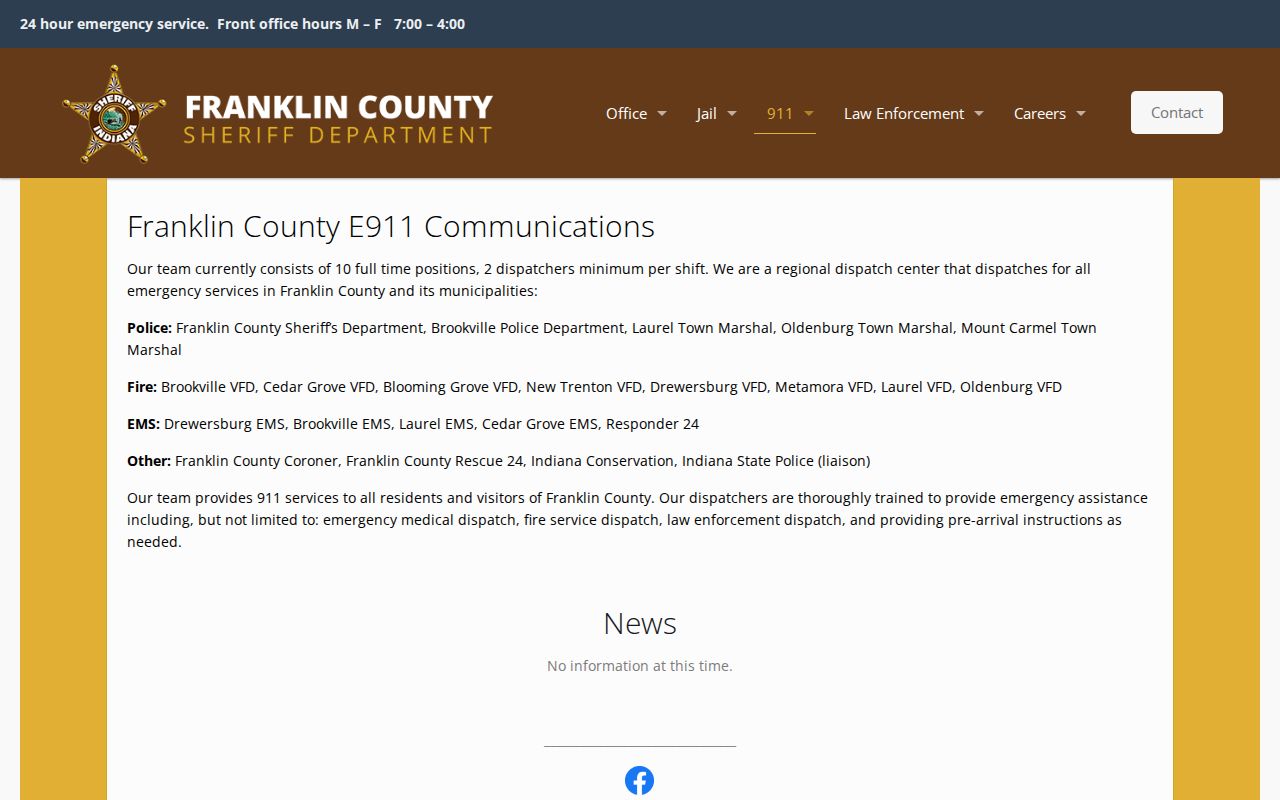
That page places the sheriff, Brookville Police, and town marshals in one network. It does not say which agency will serve a specific warrant. The sheriff operates at all hours, but published front-office hours do not prove that records, bond work, or surrender is available around the clock. Franklin County publishes no execution schedule or self-surrender policy. Call counsel, the court, and the sheriff before appearing.
Brookville Arrest Warrant Service Chain
Brookville is the county seat and the center of Franklin County court and sheriff contacts. A Brookville Police arrest can begin with town law enforcement, but the record still belongs to the issuing court. The Clerk confirms the docket. The sheriff handles county custody and sheriff-held records. Brookville Police handles its own records and police work. The official Brookville resource page publishes the police contact.
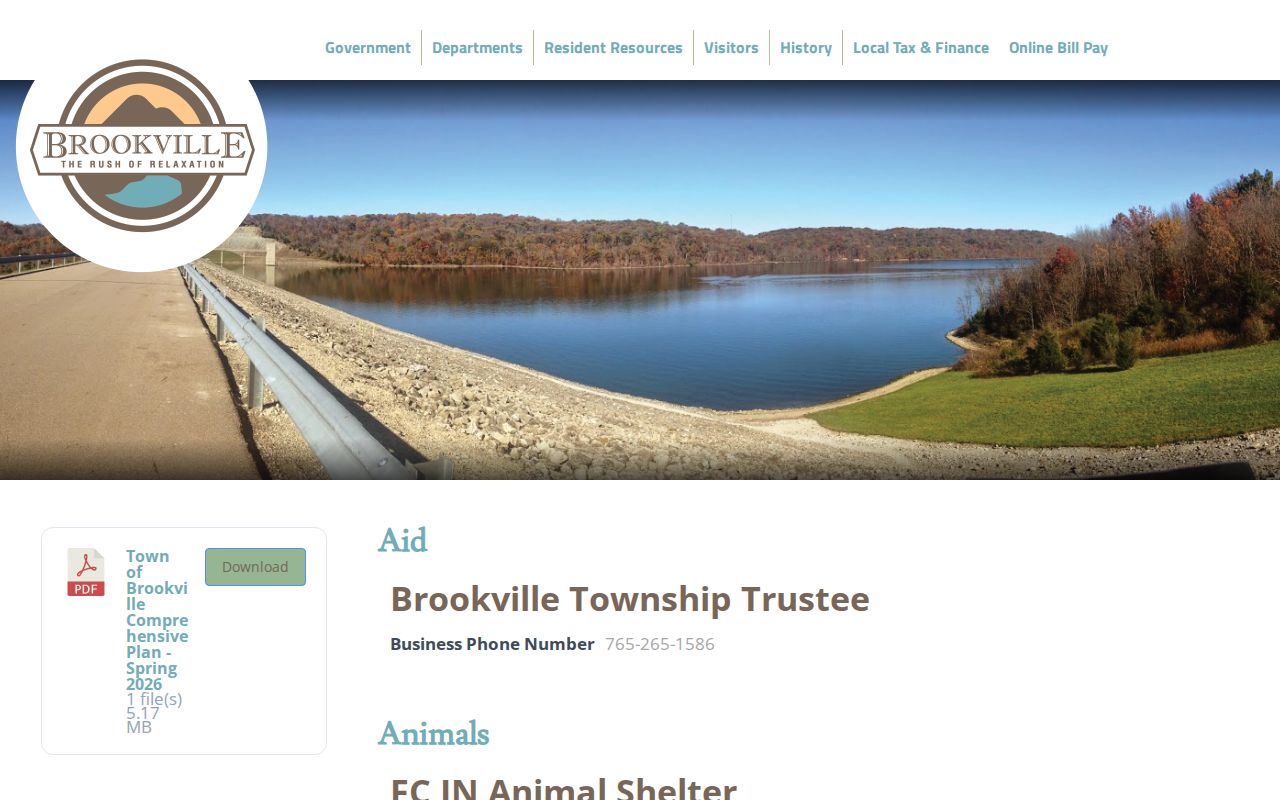
That contact can route a Brookville agency-record question. Current arrest-warrant status still comes from the Franklin County court or Clerk. The official Town of Brookville website gives county-seat context.

The town source helps separate Brookville's police role from the Franklin County court and sheriff duties just blocks away.
Note: Use 911 only for an immediate emergency, not for a routine Franklin County arrest warrant record check.
Arrest Warrants, Summonses, and Bench Warrants
Each of these processes can place a person before a Franklin County court, but they arise in different ways. An arrest warrant authorizes custody on a charge. A summons tells a person to appear without that arrest command. A bench warrant usually answers a later missed appearance or a failure to comply.
| Feature | Arrest warrant | Summons | Bench warrant |
|---|---|---|---|
| Direction | Arrest and bring before court | Appear on the stated date | Arrest after a missed duty |
| Basis | Indictment or charge with probable cause | Notice of a filed matter | Failure to appear or obey an order |
| Response | Counsel, confirmation, surrender, and bond | Appear as directed | Recall, reset, appearance, or bond |
A search warrant, by contrast, authorizes a search for evidence. An Indiana tax warrant is a lien and collection tool, not arrest authority, so read the real case label in Franklin County before choosing a response.
Confidential Franklin County Arrest Warrants
A clean MyCase search proves little. An unserved or confidential Franklin County arrest warrant can still exist behind it. State guidance lets a trial judge keep an arrest or search warrant confidential through a court order, and Indiana access rules honor those limits for records excluded by law, rule, or court order. MyCase might surface a warrant event inside a public case summary. That is not a full warrant index. A newer event, older material, a different court filter, or a protected case can each change what appears. So treat a blank result with care.
Access limit: A missing online event is not clearance. Confirm the public docket with the Franklin Clerk and seek legal advice when results remain unclear.
No document online? Use the Indiana clerk request route for a Franklin County court file. For sheriff-held records, call or file a narrow request under the Indiana Access to Public Records Act. If anything is withheld, ask for the legal basis. An agency will not build a list it never kept.
Handling an Arrest Warrant in Your Name
Start with the case number and division. Pull the number and dates from MyCase first. Then ask the Franklin County Clerk whether the warrant is still active and whether bond has been set. A lawyer can approach the court about a planned appearance, voluntary surrender, bond, or a motion to recall or quash the warrant. Recall means withdrawal. Quash means the court sets the process aside. Never assume that payment, release, or a closed case header cleared the warrant, because the judge's order and the docket control the answer. If probation is involved, call Franklin Probation at 765-647-5741 as well as the court. Probation can explain its contact path, but only the court changes a warrant's status.
Important: Consult an attorney before surrender because an active arrest warrant can lead to custody and Franklin publishes no guaranteed walk-in release process.
If bond is allowed, confirm the amount and the form with the Franklin County court and the Security Center. The sheriff schedule is dated July 10, 2025. It can change, and a case order controls. Bond secures release and appearance; it does not dismiss the charge.
Franklin Arrest Warrants After Service
Service opens the next stage. The person enters the jail and court process, and the Franklin County court takes up an initial hearing, counsel, release terms, and the pending charge. A service entry may show up in MyCase later. Online data can lag. The Clerk stays the source for the recorded return and any future dates. Keep your bond receipt and get the next court date in writing. Ask when release paperwork reaches the court. If counsel secured a recall, request the docket entry and recheck MyCase later. Release is not dismissal, and an old warrant event can linger in the case history.
- Served
- An officer carried out the warrant; the case continues.
- Initial hearing
- An early proceeding addressing the charge, rights, counsel, and release.
- Bond
- Court-authorized security and conditions tied to release and appearance.
- Recall
- A court order withdrawing the warrant.
The path is court issuance → service → custody and initial hearing → release or bond order → later case work. Each stage belongs to a named case, not a public countywide roster.